











February 2 is the World Wetlands Day .Known as the “kidney of the earth”, wetlands play a vital role in the global ecosystem in conserving water sources and regulating climate.How to achieve a win-win between wetland protection and sustainable development has long been an urgent question of our times.ESET SOLAR’s innovative practice in Datun, Peixian, Jiangsu Province has provided a perfect answer.
01. The Road to Transformation
Ecological Challenges and Transition Opportunities in Subsidence Areas
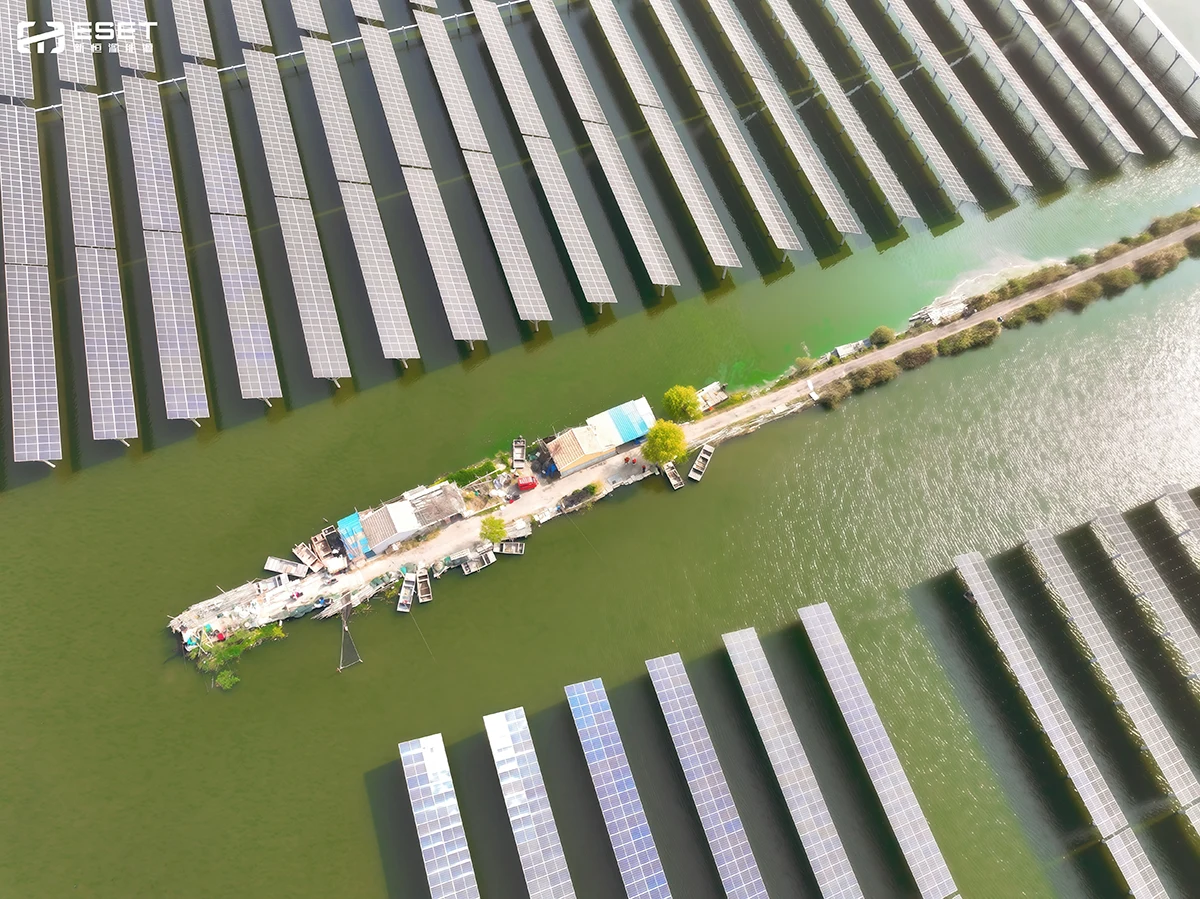
Against the backdrop of the national “Dual Carbon” strategy,Peixian, Jiangsu has become an important hub for integrated source-grid-load-storage projects.The transformation of the Datun coal mining subsidence area in Peixian is particularly remarkable:from a dilapidated pond full of scars to a vast expanse of clear water and green “granary”,this magnificent transformation is backed by ESET SOLAR’s technical support and persistent exploration.
At the start of the project,the environmental conditions of the subsidence area posed multiple obstacles to the transition.A C5-level highly corrosive environment, soft underwater soil, and potential subsidence risks set extremely strict requirements for the foundation design and installation accuracy of PV brackets.The fragile ecology around the subsidence area risked further imbalance if construction was not carefully managed.
Peixian has a temperate monsoon climate,frequently hit by strong winds and rainstorms in summer,and snowfall and low temperatures in winter.Calculations show the local wind pressure can reach up to 0.55kN/m²,coupled with fluctuating water levels,posing severe challenges to the long-term stability of the project.
02. The Strategy for Breakthrough
Technological Innovation Lights Up Wisdom for Water Environments
Facing these difficulties, ESET broke through with technological innovation.Adhering to the principle of “one customized solution for one site”:Phase I adopted fixed brackets to build a stable foundation,while Phase II upgraded efficiency with the EXCEED 2P tracking system.
In terms of materials,self-repairing zinc-aluminum-magnesium coating is used,improving corrosion resistance by 30% compared with traditional materials in high-humidity aquatic environments,eliminating the risk of corrosion polluting water bodies at the source.
The application of deep-pile foundation technology firmly anchors the brackets underwater,effectively resisting water level fluctuations and geological subsidence.
The 2P multi-point linkage structure improves power generation efficiency while reducing the number of foundations,minimizing impacts on aquatic ecology.
Equipped with intelligent multi-point electrical linkage technology,it achieves synchronous drive and locking,enhances torsional stiffness and critical wind speed,and thoroughly solves the aerodynamic stability challenges of long-chord structures under complex climates,laying a reliable foundation for long-term project value.
03. The Path to Win-Win Results
Scenario Empowerment Activates New Vitality in Subsidence Areas
ESET SOLAR’s PV technologies have not only improved the local ecology but also improved residents’ lives.
Benefiting from the self-developed intelligent tracking control system with ±1° tracking accuracy,the tracking brackets automatically adjust to a preset protective angle when strong wind alerts are triggered by climate sensors,effectively reducing wind load.When snow alerts are activated,the system enters an automatic snow-removal mode,rotating at a large angle to quickly shed snow.
With excellent adaptability and stability,the project generates approximately 81 million kWh of electricity annually,enough to power 34,000 households.
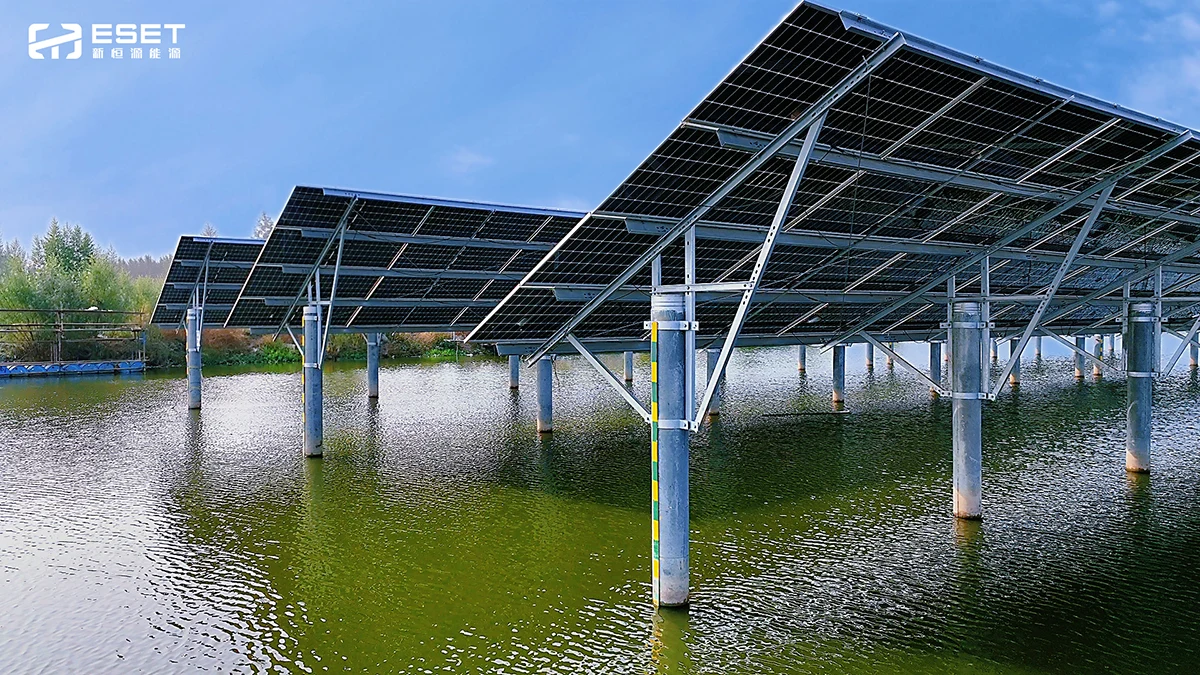
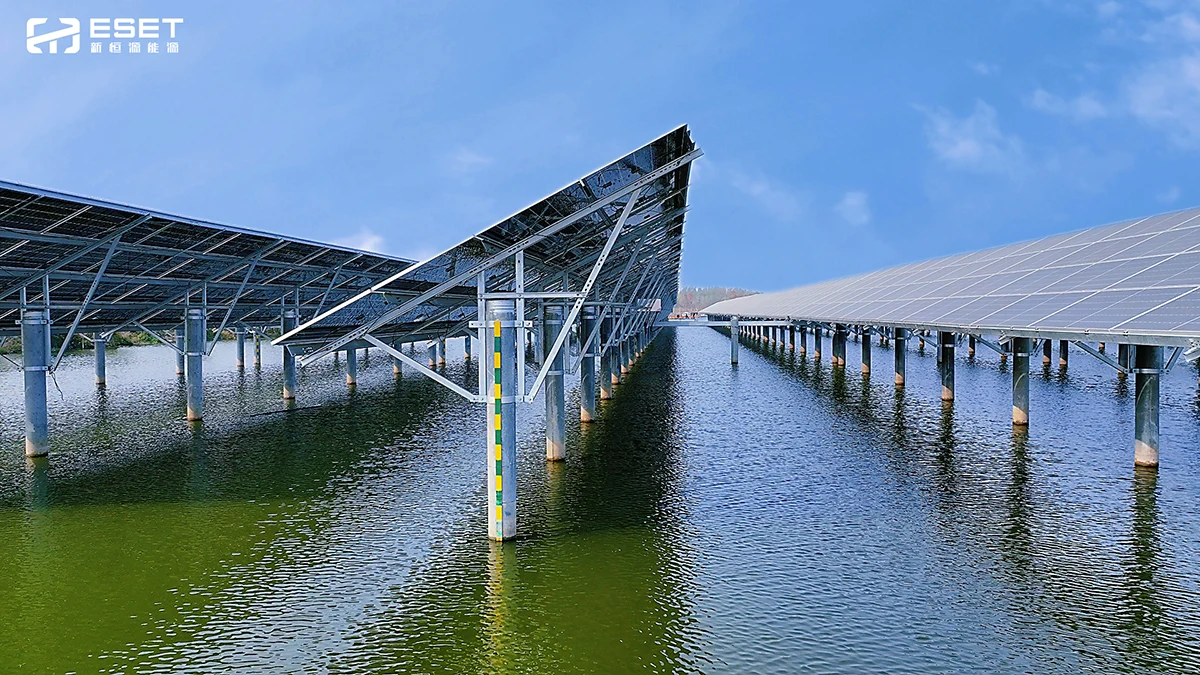
More importantly,based on water depth, light conditions, and aquatic organism distribution,the bracket height and PV array spacing are precisely optimized.This ensures high-efficiency power generation while reserving sufficient light and oxygen circulation underwater.
This three-dimensional development model —power generation on the water, aquaculture underwater —boosts power station benefits, increases farmers’ income,and achieves a true win-win between wetland protection and sustainable development.
The Datun, Peixian transformation caseprovides replicable and referable experience for numerous ecologically restorative subsidence areas across China.
ESET will continue its exploration,rooting technological innovation in local realities,integrating ecological logic into bracket design,and letting the vision of fishery-solar symbiosis shine on more lands.